What is metallurgy? When we talk about metallurgy, we refer to the technical and scientific discipline that studies the entire life cycle of metals, from extraction from ores to their transformation into usable industrial materials.
This cycle includes several fundamental areas:
- extraction of metals from ores
- transformation and processing of metals
- study of physical and chemical properties
- analysis of the mechanical behavior of alloys
Modern metallurgy is no longer just a set of techniques for melting and processing metals. Today, it represents a discipline that integrates chemistry, physics and industrial engineering, with the goal of designing increasingly high-performance materials and precisely controlling their characteristics.
At the core of modern industrial metallurgy lies a fundamental principle: control of the chemical composition of metals. Even minimal variations in alloying element percentages can significantly affect the final material properties, influencing strength, hardness, workability and corrosion resistance.
What is metallurgy? Technical definition and applications
From a technical perspective, metallurgy is divided into three main areas of study.
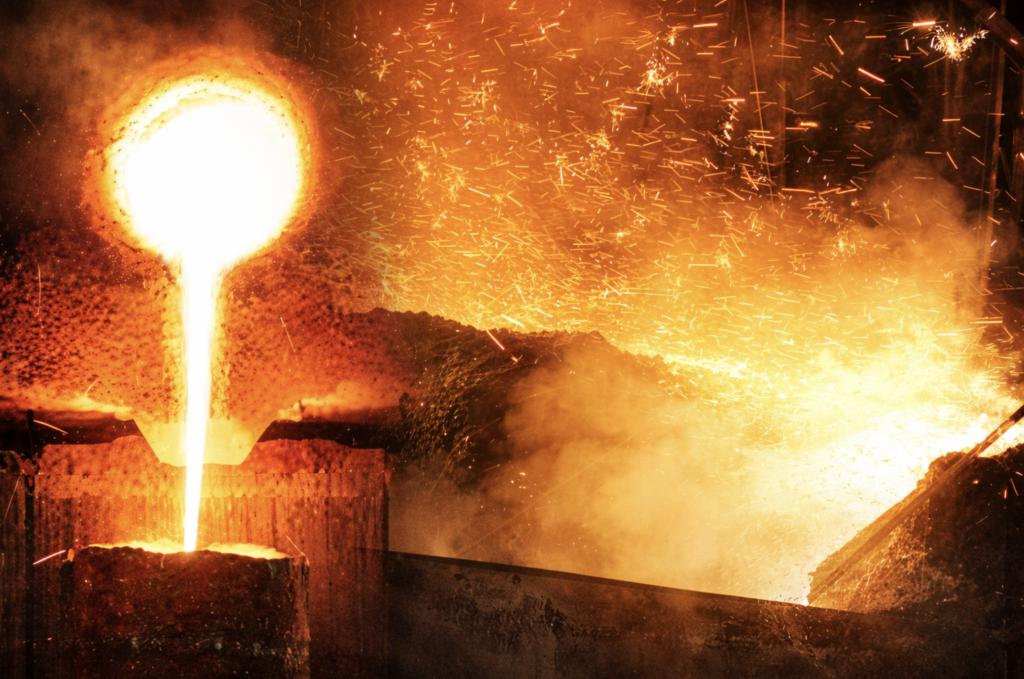
Extractive metallurgy focuses on the processes through which metals are separated from naturally occurring ores. It includes activities such as smelting, refining and purification.
Physical metallurgy studies the internal structure of metals and alloys, analyzing phenomena such as phase transformations, microstructure and physical properties.
Mechanical metallurgy deals with metal processing techniques such as rolling, forging, extrusion and heat treatments.
These disciplines form the foundation of many strategic industrial sectors. Metallurgy is essential for:
- automotive industry
- aerospace
- energy production
- construction and infrastructure
- precision engineering
In all these fields, material quality depends on a decisive factor: the chemical composition of the metal alloy. For this reason, every alloy must be precisely controlled throughout all stages of the production process.
What is the difference between metallurgy and steelmaking?
The terms metallurgy and steelmaking are often used interchangeably, but they refer to different areas.
Metallurgy concerns the study and processing of all metals, including aluminum, copper, titanium, nickel and many advanced alloys used in modern industry.
Steelmaking (or iron metallurgy), on the other hand, is the branch of metallurgy that deals exclusively with iron and steel.
In other words, steelmaking is a subset of metallurgy, specifically focused on ferrous materials.
Who studies metals? The role of the metallurgical engineer
The study of metals involves several highly specialized professional roles.
These include:
- metallurgical engineers
- materials engineers
- industrial chemists
- metallurgical laboratory technicians
The metallurgical engineer plays a central role in the design and control of metallic materials used in industry. Their responsibilities include:
- design and development of new metal alloys
- microstructural analysis of materials
- quality control of metal products
- optimization of production processes
A key part of this work is elemental analysis of metals, meaning the precise determination of the chemical elements present in an alloy.
Chemical composition control in metallurgy
In industrial metallurgy, controlling chemical composition is essential to ensure the quality of the final product. This control typically takes place at three key stages of the production process.
Before casting:
Before melting, the composition of the metal charge and raw materials is verified to ensure that the alloy meets the required specifications from the start.
During production:
During melting and refining, real-time checks are performed to verify alloy composition and, if necessary, adjust it by adding alloying elements.
Final quality control:
At the end of production, a final verification ensures that the material complies with technical and regulatory specifications.
Errors in chemical composition can lead to serious issues in the final material, including:
- brittleness and loss of strength
- crack formation
- structural defects
- non-compliance with industrial standards
For this reason, metallurgical industries rely on highly precise analytical instruments to rapidly analyze metal alloys.
OES spectrometry in metallurgy: the role of GNR instruments
Among the most widely used technologies for metal analysis is Optical Emission Spectrometry (OES).
→ Visit the GNR website to explore all applications.
OES spectrometry allows the concentration of chemical elements in solid metals to be determined in just a few seconds, enabling fast and accurate control of alloy composition throughout all production stages.
Commonly analyzed elements include carbon (C), silicon (Si), manganese (Mn), chromium (Cr), nickel (Ni), molybdenum (Mo), aluminum (Al) and copper (Cu), along with many other alloying elements essential for defining material properties.
For this type of analysis, GNR Analytical Instruments develops a complete range of OES spectrometers designed for different industrial contexts, from small foundries to large steel plants and quality control laboratories.
Key instruments include S1 MiniLab 150 and S3 MiniLab 300, compact spectrometers designed for metallurgical laboratories and foundries requiring fast and reliable composition control.
For more advanced applications, systems such as S6 Sirius 500 are available, designed for high-precision analysis of both ferrous and non-ferrous materials, along with portable solutions like E3 Esaport and E4 Esaport Plus, ideal for in-production or on-site analysis.
The range also includes S7 Metal Lab Plus and S5 Solaris Plus, designed for industrial laboratories requiring high analytical performance, broad elemental coverage and maximum application flexibility.
These spectrometers support foundries, steel plants, mechanical industries and quality control laboratories, enabling fast and reliable analysis directly in production environments and ensuring precise control of metal alloy composition.
Modern metallurgy: precision, data and real-time control
Contemporary metallurgy is undergoing a profound transformation driven by the digitalization of production processes.
Modern metallurgical industries use integrated systems that enable:
- digital production control
- material batch traceability
- process data analysis
- integration with management systems and ERP platforms
In this context, the concept of Metallurgy 4.0 is becoming increasingly relevant, where chemical analysis, data management and process control are central to ensuring quality and competitiveness.
Among the most important innovations is metal additive manufacturing, which enables the production of complex components using technologies such as Selective Laser Melting (SLM) and Electron Beam Melting (EBM). These processes allow precise control of material microstructure and reduction of production waste.
Today, metallurgy is no longer limited to melting and transforming metals. It represents a scientific management of chemical composition and material properties. In this scenario, analytical precision is what ensures safety, reliability and high performance in metal products used by modern industry.
FAQ
Metallurgy is the technical and scientific discipline that studies the extraction, processing and properties of metals and metal alloys.
Iron metallurgy, more commonly known as steelmaking, refers to the processes involved in the production and processing of iron and steel.
Metals are primarily studied by metallurgical engineers, materials engineers, industrial chemists and specialized laboratory technicians, all of whom require strong knowledge of materials science, chemistry and industrial processes.
Because even small variations in chemical composition can significantly alter the mechanical and structural properties of a metal alloy, affecting its performance and reliability.
OES spectrometry analyzes solid metals through an electrical discharge that excites the atoms in the material, allowing the concentration of chemical elements to be determined via optical emission spectroscopy.
Among the most widely used instruments are Optical Emission Spectrometers (OES), which enable rapid and accurate analysis of the elemental composition of metal alloys.